
Akwaaba Next Generation Foundation reached 48 individuals across 12 vulnerable households in Akonoma, providing essential food supplies, drinking water, refreshments and personal hygiene products. All distributed items were funded by the Foundation itself.
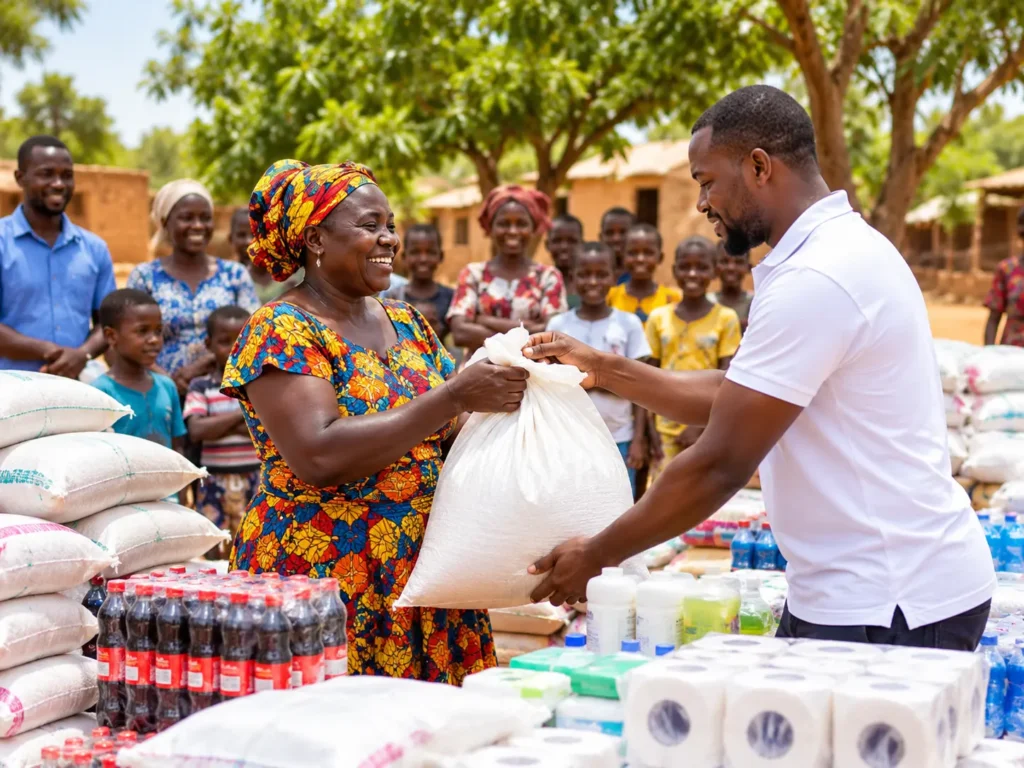
On 10 October 2026, Akwaaba Next Generation Foundation successfully carried out a Community Food & Hygiene Relief Drive in Akonoma Community, Ghana. The initiative reached 48 individuals across 12 vulnerable households, providing essential food supplies, drinking water, refreshments and personal hygiene products.
The activity was organised to address immediate food insecurity and hygiene shortages experienced by community members facing economic hardship and other vulnerabilities. All distributed items were funded by the Foundation itself. No external donor contributions were recorded for this activity.
The items were distributed with a focus on dignity, safety and accessibility. Beneficiaries included orphaned children, elderly residents, single mothers and young people. Volunteers also arranged door-to-door deliveries for elderly and disabled residents who required additional assistance.
The main objectives were to:
Funding source: The activity was funded by Akwaaba Next Generation Foundation’s own funds.
The reported expenditure represents 84% of the allocated budget, leaving 16% unspent. The remaining balance should be reconciled against receipts and the Foundation’s financial records.
The drive reached 48 individuals across 12 households, averaging four individuals per household.
Priority was given to vulnerable community members, including orphaned children, elderly residents, single mothers and young people.
The activity contributed to immediate food relief and improved access to personal hygiene supplies. By including essential sanitation products, the Foundation also sought to help families maintain personal hygiene and reduce potential health risks associated with inadequate hygiene resources.
Higher-than-Expected Turnout
The turnout exceeded the number of items available, resulting in minor crowd-management difficulties at the beginning of the distribution.
Recommendation: Introduce a clearer queue-management system, improve beneficiary planning and reserve a small proportion of supplies for unexpected emergency cases.
Transport Delays
Poor road conditions in Akonoma caused delays in transporting supplies to the distribution location.
Recommendation: Schedule transport to arrive at least two hours before the official distribution start time and allow additional time for difficult road conditions.
Akonoma, also known as Asebu Akonoma, is a rural community in Ghana’s Central Region, within the Abura-Asebu-Kwamankese District. The community is located in an area connected to local hubs including Yamoransa and Moree.
The Foundation selected Akonoma as part of its commitment to supporting vulnerable communities, alleviating poverty and helping local residents work towards a more self-sustaining future.
The Community Food & Hygiene Relief Drive provided immediate assistance to 12 vulnerable households, reaching 48 individuals in Akonoma Community. The distribution of staple foods and hygiene supplies addressed urgent needs while promoting personal hygiene, dignity and community well-being.
The experience also highlighted opportunities to improve beneficiary planning, crowd management and transport coordination in future activities.
The Foundation intends to explore extending similar relief initiatives to neighbouring communities. Where resources allow, future programmes may combine essential-supply distribution with vocational workshops and livelihood activities to support longer-term self-reliance.
Akwaaba Next Generation Foundation extends its appreciation to the community leaders, volunteers and all those who contributed to the successful delivery of this initiative. The Foundation also welcomes future collaboration with corporate partners and individual donors to expand its community support programmes.